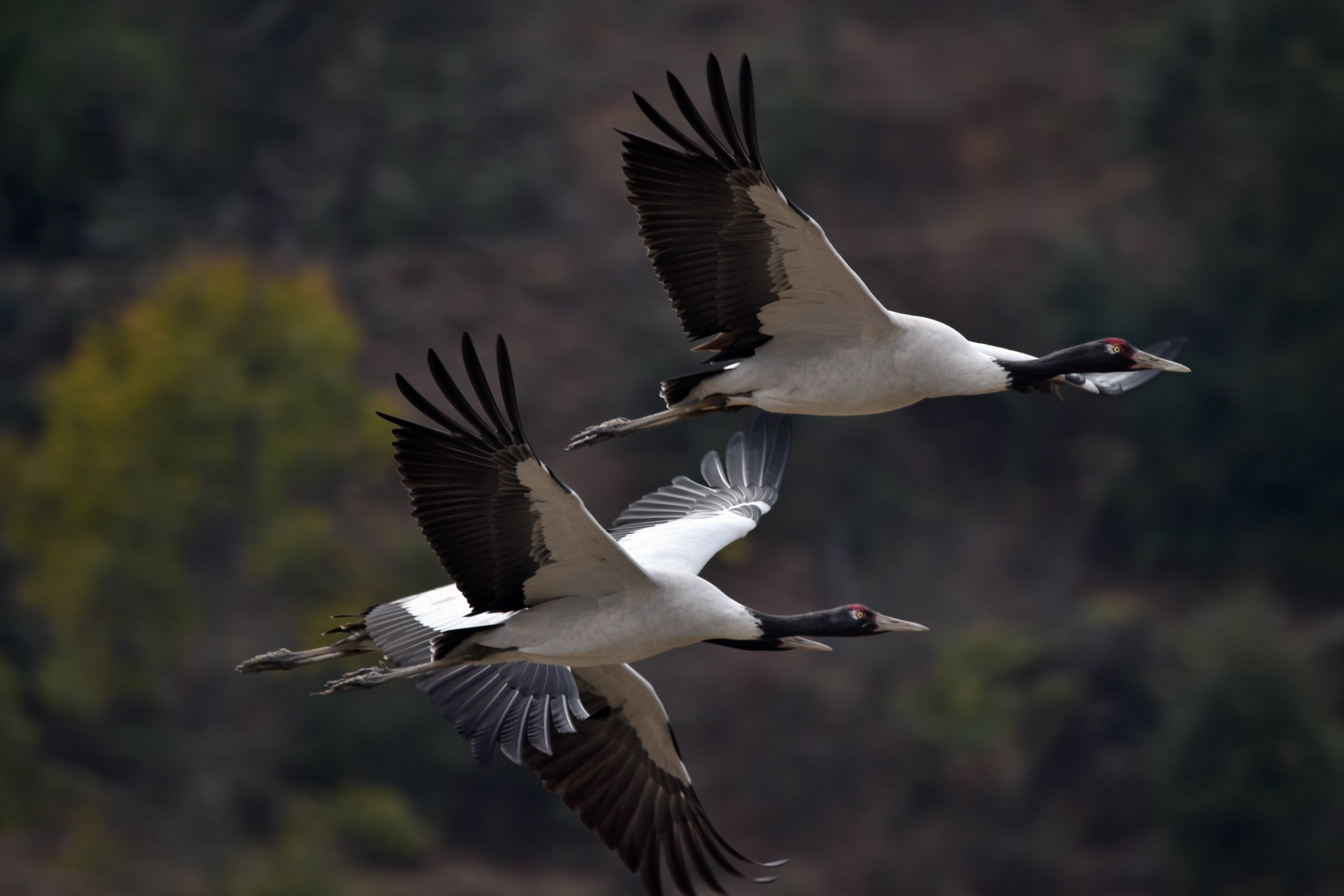
Phobjikha Valley: Following the Black-Necked Cranes
Each November, a remarkable natural spectacle unfolds in Bhutan's Phobjikha Valley. As winter approaches, hundreds of endangered black-necked cranes complete their migration from the Tibetan Plateau, descending into this glacial valley to spend the cold months. Their arrival transforms Phobjikha into one of Asia's most significant wildlife experiences—a place where conservation, culture, and the rhythms of nature interweave beautifully.
The Sacred Cranes of Bhutan
A Rare and Revered Species
The black-necked crane (Grus nigricollis) is one of the world's fifteen crane species and the only alpine crane, spending summers breeding on the high-altitude plateaus of Tibet and winters in protected valleys like Phobjikha. Standing up to 130 cm tall with distinctive black heads, necks, and white bodies, these majestic birds cut striking figures against Phobjikha's golden marshes.
Listed as "Vulnerable" by the International Union for Conservation of Nature, with only about 11,000 individuals remaining worldwide, every sighting carries weight. Bhutan hosts approximately 400-600 cranes each winter, making it a crucial sanctuary for the species.
Spiritual Significance
In Bhutanese Buddhism, cranes are considered sacred and auspicious. Local legends tell of the cranes circling Gangtey Monastery three times upon arrival and departure—a behavior actually observed by researchers and villagers. This spiritual reverence has created a natural partnership between conservation and faith, with religious leaders championing crane protection.
The valley's name, Gangtey or Gangteng, translates to "hilltop," referring to the monastery that overlooks this pristine landscape. The monastery itself was prophesied in the 16th century by the revered saint Pema Lingpa, who predicted that a monastery built here would protect the valley and its sacred residents.
The Migration Story
Journey from Tibet
Black-necked cranes begin their migration in late October, flying over the Himalayas from their breeding grounds on the Tibetan Plateau. This perilous journey crosses some of the world's highest mountain passes, with cranes navigating altitudes above 5,000 meters.
They typically arrive in Phobjikha in early November, with numbers peaking by mid-month. The cranes remain until late February or early March, when warming weather and breeding instincts pull them back to Tibet.
Why Phobjikha?
This U-shaped glacial valley offers ideal winter habitat:
- Abundant Food: Marshes and fallow fields provide roots, tubers, and insects
- Open Spaces: Clear sightlines allow cranes to spot predators
- Minimal Disturbance: Protected status and religious reverence ensure peace
- Altitude: At 3,000 meters, it's high enough to suit alpine crane preferences
- Climate: Cold but not extreme, with reliable food sources
Experiencing the Cranes
Best Viewing Times
November: Peak arrival period offers the most cranes and the most activity. The Black-Necked Crane Festival (usually November 11) celebrates their return with folk dances, crane-themed performances, and conservation education.
December-January: Cranes settle into winter routines. Early mornings show them feeding in marshes and agricultural fields. Numbers remain high throughout these months.
February: Cranes begin preparing for migration, with increased vocalizations and pairing behaviors. By late February, they start departing.
Daily Patterns
Understanding crane behavior enhances viewing:
Dawn (6:30-8:00 AM): Cranes wake at first light, calling to each other with their distinctive trumpeting cries. This is prime viewing time as they leave overnight roosts and disperse to feeding grounds.
Midday (10:00 AM - 3:00 PM): Less active period when cranes rest, preen, and interact socially. Good time to observe behavior without disturbance.
Late Afternoon (4:00-5:30 PM): Increased feeding activity before roosting. Cranes gather in favorite areas as daylight fades.
Sunset: Cranes return to roosting sites in groups, their silhouettes dramatic against Phobjikha's mountain backdrop.
Best Viewing Locations
Gangtey Monastery Viewpoint: The monastery courtyard offers sweeping valley views. Early morning reveals cranes dotting the marshes below. This is the iconic Phobjikha photograph—golden valley, morning mist, and elegant cranes.
Valley Floor Walk: The Gangtey Nature Trail and other valley paths bring you near feeding areas. Maintain respectful distance (at least 100 meters) to avoid disturbing the birds.
Observation Hut: Near Khewa village, this simple shelter provides cover for patient wildlife watchers. Bring binoculars for close-up views without approaching cranes.
Agricultural Fields: Cranes often feed in harvested potato and buckwheat fields. Local farmers welcome their presence, viewing cranes as blessings rather than pests.
Conservation Efforts
Community-Based Protection
Phobjikha's conservation success stems from collaboration between government, religious institutions, and local communities. The Royal Society for Protection of Nature (RSPN) works with villagers who have voluntarily limited development and changed agricultural practices to benefit cranes.
Key initiatives include:
- Power Line Management: Underground cables in critical areas prevent crane collisions
- Habitat Preservation: Marshes protected from drainage and development
- Agriculture Coordination: Farmers delay planting and avoid pesticides during crane season
- Education Programs: Schools teach children about crane ecology and conservation
- Ecotourism Development: Provides economic alternatives to activities that might harm cranes
Black-Necked Crane Festival
Held annually at Gangtey Monastery, this festival blends conservation awareness with cultural celebration. Local school children perform crane-inspired dances, wildlife experts give talks, and the community reaffirms its commitment to protection.
For visitors, the festival offers:
- Cultural performances with traditional costumes and music
- Educational exhibits about crane ecology
- Opportunity to interact with conservationists and local people
- Photography opportunities as cranes feed nearby
- Celebration of Bhutan's unique conservation philosophy
Beyond the Cranes: Exploring Phobjikha
Gangtey Monastery
This 17th-century monastery complex, recently renovated, exemplifies traditional Bhutanese architecture. The main temple houses ancient statues, murals, and religious texts. Monks chant prayers in the early morning, their voices carrying across the valley.
Visitors can:
- Explore temple courtyards and prayer halls
- Learn about the Pema Lingpa tradition of Buddhism
- Observe monks engaged in daily rituals
- Enjoy panoramic valley views from monastery grounds
Gangtey Nature Trail
This 4-kilometer trail loops through the valley floor, passing through:
- Blue Pine Forests: Bhutan's only conifer endemic, draped with hanging lichen
- Oak Groves: Habitat for birds and small mammals
- Marshlands: Critical crane feeding areas (observe from designated paths)
- Traditional Villages: Khewa, Tshaja, and others with authentic farmhouses
- Prayer Wheels: Small shrines mark the path
The gentle walk takes 2-3 hours, requiring minimal fitness but offering maximum immersion in Phobjikha's ecosystem. Interpretive signs explain local ecology and conservation efforts.
Village Life
Phobjikha remains deeply traditional, with farming families maintaining lifestyles centered on potato cultivation and yak herding. Several homestays allow visitors to:
- Share meals of buckwheat pancakes, potato dishes, and butter tea
- Learn about high-altitude agriculture challenges
- Participate in daily chores (seasonal activities like potato harvesting)
- Experience genuine Bhutanese hospitality
- Support local families directly
Trekking Options
Gangtey-Gogona Trek (2 days): Connects Phobjikha with the Gogona Valley through forests and high ridges
Day Hikes: Shorter trails climb surrounding hills for valley overlooks and forest exploration
Winter Walks: Easy valley strolls suitable for all ages, with crane viewing integrated
Practical Information
Getting There
Phobjikha lies approximately:
- 3 hours from Punakha
- 4-5 hours from Thimphu
- 6-7 hours from Paro
The journey crosses the Black Mountain range via Lawala Pass (3,360m), offering spectacular scenery and potential wildlife sightings (bharal, goral, occasionally takin).
The final descent into Phobjikha reveals why cranes choose this sanctuary—a pristine bowl-shaped valley untouched by urban development.
Where to Stay
Accommodation ranges from luxury lodges to simple guesthouses:
Luxury: Gangtey Lodge and Dewachen Hotel offer comfort with valley views
Mid-range: Hotel Khuru Villa and similar properties provide warmth and Bhutanese character
Budget: Village guesthouses and homestays offer authentic experiences
Unique: Farmstays put you in the heart of valley life
All accommodations arrange early wake-ups for crane viewing and can coordinate activities with guides.
What to Bring
- Warm Clothing: Phobjikha is cold November-February (nights below freezing)
- Binoculars: Essential for crane watching without disturbance
- Camera: Telephoto lens (200-400mm) ideal for bird photography
- Layered Clothes: Days warm up with sun but mornings and evenings are frigid
- Sturdy Shoes: For valley walks and trails
- Patience: Wildlife viewing rewards those who wait quietly
Responsible Viewing
To minimize disturbance:
- Maintain minimum 100-meter distance from cranes
- Never chase or attempt to approach feeding birds
- Keep voices low in crane viewing areas
- Follow designated paths through sensitive habitats
- Support conservation programs through donations or purchase of local crafts
Combining with Your Itinerary
Phobjikha integrates beautifully into central Bhutan circuits:
Classic Route: Paro → Thimphu → Punakha → Phobjikha → return (8-10 days)
Cultural Circuit: Phobjikha → Trongsa → Bumthang → return (12-14 days)
Trekking Focus: Punakha → trek to Phobjikha → valley exploration (variation on Gangtey trek)
Most visitors spend 1-2 nights, allowing time for crane viewing at different times of day and exploration of monastery and nature trail.
The Magic of Phobjikha
There's something transcendent about Phobjikha Valley in winter. Perhaps it's the cranes themselves—their grace, their calls echoing across frozen marshes, their annual return affirming that migrations continue despite global changes. Perhaps it's the valley's timeless quality, where electricity arrived only recently and life follows patterns older than memory.
Or maybe it's witnessing conservation that works not through restriction but through reverence, where protecting cranes flows naturally from Buddhist teachings about compassion for all beings. The villagers here don't tolerate cranes despite economic sacrifice—they celebrate them as sacred guests who honor their valley with their presence.
Standing on Gangtey Monastery at dawn, watching hundreds of cranes lift from their roosts in a symphony of wingbeats and trumpeting calls, you witness more than a wildlife spectacle. You see proof that humans and nature can coexist beautifully when culture supports conservation, when faith aligns with ecology, and when communities choose protection over profit.
This is Phobjikha's gift—not just the cranes, though they would be enough, but a vision of how preservation works when it grows from the heart of a culture rather than being imposed from outside. It's a lesson as valuable as the experience is unforgettable.
Ready to witness the black-necked cranes in Phobjikha Valley and experience Bhutan's successful conservation story? Contact Inscape Journeys to plan your visit during crane season with guides who know these birds and this valley intimately.